Key Takeaways:
- Not all speed bumps, speed humps, speed cushions and speed tables are the same – their shape, profile and material radically change comfort, noise and lifespan.
- Most frustration around car damage, noise and pollution comes from cheap, out-of-spec humps rather than well-designed, compliant traffic calming devices.
- Councils frequently buy on lowest upfront cost, not whole-life value, and rarely share full maintenance or complaint data with residents.
- A practical checklist exists to compare options like asphalt humps, rubber speed bumps and modular cobbled speed tables so you can calm traffic without triggering endless complaints.
- Removing speed bumps may increase accident risks, so the goal should be choosing better devices – not abandoning traffic calming altogether.
Introduction: Why Your Local Speed Bump Feels So Bad
It’s 8:30 on a Tuesday morning. You’re crawling past a primary school in a 20 mph zone and your suspension crashes over a sleeping policeman so harsh it rattles your teeth. Behind you, the parent in the SUV brakes late, hits it harder, and you hear the exhaust scrape. Speed bumps are raised sections of road pavement designed as a traffic calming measure, yet somehow the cure feels worse than the disease.
Here’s the thing: residents want to slow traffic and protect people – especially children and pedestrians. Drivers want to get home without damage vehicles or wake the street at midnight. Both sides are right, and both are being let down by the same problem: most people, including many councillors, assume all speed bumps are alike. They are not. Profile, material and placement make or break every scheme.
I’ve spent years working alongside UK councils, highways engineers and contractors, watching how real decisions on speed inhibitors are made behind closed doors. In this article I’ll debunk seven myths about bumps and humps, then hand you a buyer’s guide so you can compare traffic calming solutions with confidence.
Myth #1 – “A Speed Bump Is a Speed Bump”
This is the myth that feeds every other one. In everyday conversation “speed bump” covers a whole family of devices, but in UK traffic calming guidance the differences are enormous.
A traditional speed bump – the type commonly found in car parks and parking lots – is a short, aggressive raised section designed to abruptly lower vehicle speed to 10–15 km/h (roughly 5–10 mph). Speed humps, by contrast, are gentle, wide raised sections that are less steep and allow gradual speed reduction. They let vehicles pass at slightly faster, steadier speeds and are effective at reducing overall average speed by 20–25 per cent. Then there are speed cushions – segmented units with gaps allowing vehicles with wider axles to straddle them – speed tables, which are flat-topped and used at pedestrian crossings, and sinusoidal humps with smooth, wave-like profiles that cause far less jarring.
Speed tables act as raised pedestrian crossings and are highly effective for pedestrian safety. They are a world apart from the harsh bump outside a depot gate. Speed bumps typically reduce vehicle speeds by 8–10 mph, but how they achieve that reduction – gently or brutally – depends entirely on the profile.
The council secret? Many authorities default to the cheapest asphalt hump because capital budgets are tight. Quotes are compared on upfront price, not on noise, lifespan or maintenance cost over 20–30 years. Councils rarely publish whole-life cost comparisons between basic road humps, modular speed cushions and engineered speed tables, even though internal asset teams often hold this data. That gap in transparency is where resident frustration begins.
Myth #2 – “Speed Bumps Destroy Your Car”
The fear is real: bent alloys, misaligned steering, cracked exhaust pipes. Around 25 per cent of drivers report suffering vehicle damage from speed bumps, and hitting a speed bump at speed is like hitting a pothole – the jolt travels straight through your shock absorbers and into the chassis. Driving fast over speed bumps can damage suspension components, and speed bumps can knock exhaust pipes down if hit hard. Regularly driving over speed bumps increases tire wear too, especially on inner shoulders from repeated cushion crossings.
But here’s the nuance most people miss. Properly designed, compliant road humps – built within DfT height guidelines with gradual, sinusoidal profiles or flat-top tables – cause minimal additional wear when driven over at the posted speed. The real culprits are out-of-spec bumps: humps that have sunk after resurfacing, been patched around utility works, or were never built to correct dimensions in the first place. These effectively become potholes in reverse.
What the council won’t volunteer is that routine resurfacing projects can leave humps higher or sharper than their Traffic Regulation Order drawings specify, and maintenance backlogs mean they stay that way for years. Driving too fast over speed bumps can damage your vehicle, but so can driving at legal speed over a non-compliant one.
Your move as a resident: ask your council’s highways team for the TRO for the scheme and a design-compliance or as-built certificate showing the hump profile and height. If they can’t produce one, you’ve found the problem. Speed bumps should be crossed at a slow speed to avoid damage, and you should approach speed bumps by braking before reaching them rather than stamping on the pedal at the last second.
Myth #3 – “Noise from Speed Bumps Is Inevitable”
Picture a terraced street at 11 pm. Every few minutes a van crests a badly shaped hump and the neighbourhood gets a “thump–clatter” followed by engine roar as the driver accelerates away. Noise complaints are most strongly linked to abrupt profiles and cheap materials – short asphalt ramps that cause wheel slap, rattling loads and sharp braking–acceleration cycles.
Yet speed bumps can actually decrease traffic noise levels when designed well. Material choice matters enormously. Cobbled or modular speed tables using resin-bound setts produce a lower-frequency rumble that residents barely notice, while rubber speed bumps absorb some impact energy and soften the harsh “bang” of rigid concrete edges. Research shows badly designed humps can add 3–5 dB(A) to local noise, whereas smoother profiles limit the rise to barely perceptible levels.
The insider secret: councils do record noise and vibration complaints after new traffic calming measures go in, but this data rarely appears in consultation leaflets or online scheme summaries. Publishing it would spotlight the cost of choosing the cheapest road surface option. When specifying, weigh 24-hour traffic volume, proportion of HGVs and buses, proximity of bedroom windows, and whether a sinusoidal hump or speed table would noticeably reduce complaints compared with conventional speed bumps.
Myth #4 – “Speed Bumps Work Everywhere”
You cannot copy-and-paste the same speed ramp design across every road. On emergency corridors where fire engines and ambulances need every second, full-width humps slow emergency vehicles, potentially affecting response times. On primary bus routes, passengers – especially elderly riders – suffer spinal damage risk from repeated harsh jolts. On steep hills, aggressive humps interfere with drainage and turn into ice hazards in cold weather.
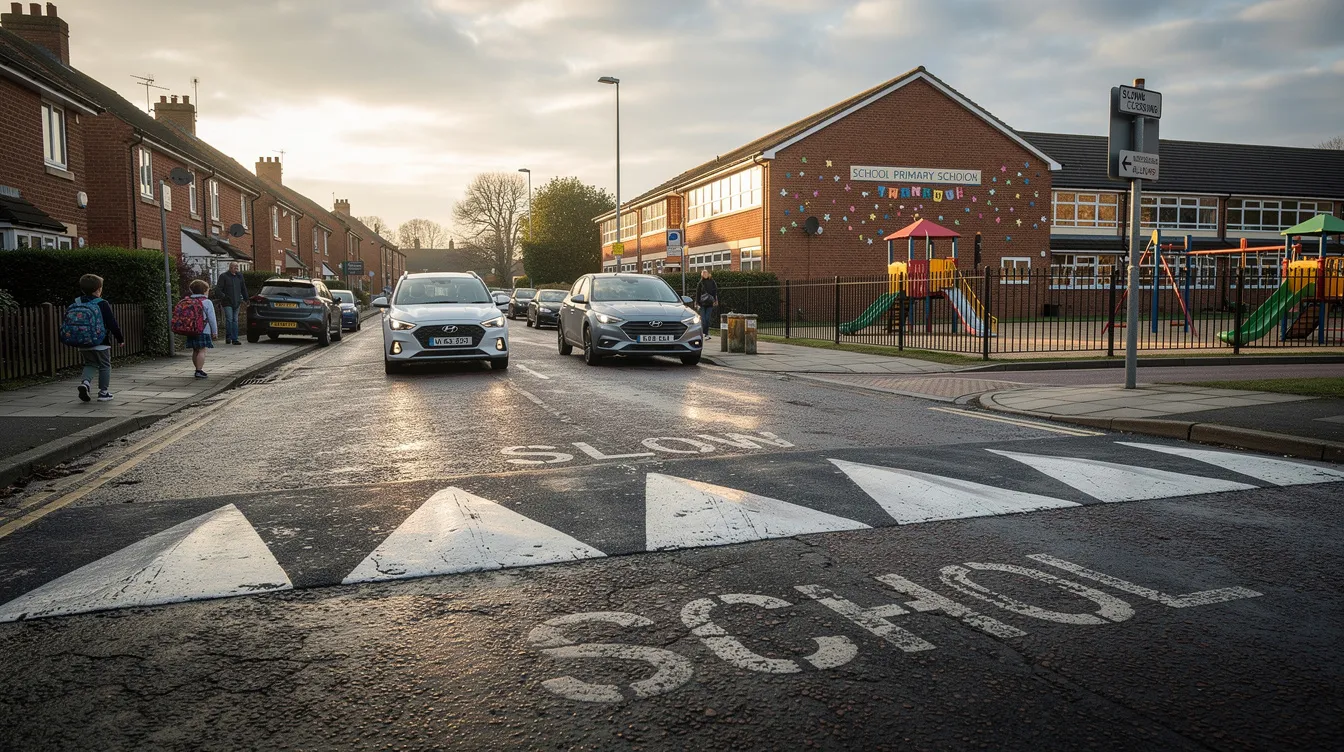
Speed cushions allow emergency vehicles to pass without slowing down because wider axles straddle the gaps. Chicanes are artificial bends that force traffic to slow down without vertical deflection. Speed bumps are effective in residential areas and near schools, but that doesn’t make them right for a hospital approach road or a busy construction site access.
Speed bumps reduce accidents by 60–70 per cent when speeds drop by 9 mph, and can decrease collision rates by 13 per cent overall. But those gains vanish if the wrong device on the wrong road pushes drivers into erratic braking, or if emergency services are delayed. Before committing, run through a buyer’s checklist: what vehicles dominate – cars, larger vehicles, buses, emergency vehicles? What is the pedestrian density near zebra crossings or road crossings? What noise level can adjacent homes or hospitals tolerate? What is the realistic 20-year budget including maintenance? Answering those questions before choosing a device is what separates good traffic calming from bad.
Myth #5 – “Asphalt Is Always the Most Durable Choice”
Many people picture most speed bumps as simple tarmac lumps – cheap, tough, long-lasting. Reality is less flattering. A heavily trafficked asphalt hump on a bus route in the UK typically needs major maintenance every 10–15 years. Common failure modes include cracking, potholes, rutting and de-bonding at the edges, all accelerated by freeze–thaw cycles, repeated braking, fuel spills and UV exposure.
Compare that with engineered alternatives. High-density rubber speed bumps suit construction sites and private areas where quick installation matters. Modular design systems using interlocking blocks or resin-bound granite setts can last 20–30 years with only localised repairs – a case in Leicester used a combination table with rubber traffic islands and tarmac infill on a steep 20 mph residential street, and it was chosen specifically for durability and premium appearance.
The council secret here is structural: capital budgets are annual, so project teams are rewarded for low upfront spend. Whole-life costing – factoring in resurfacing, patch repairs and complaint handling – would often favour the more robust option. Ask suppliers for side-by-side lifespan and maintenance estimates whenever you’re comparing a cast-in-place tarmac hump with a modular cobbled speed table.
Myth #6 – “All Innovative Speed Bumps Are Gimmicks”
Scepticism is fair. But dismissing new technology outright means ignoring devices that could solve problems traditional speed bumps cannot. Dynamic speed bumps use radar or pressure-sensitive mechanisms so that vehicles at or below the set speed experience a near-level road surface, while faster drivers feel a pronounced bump. Modern intelligent speed bumps use non-Newtonian fluids that change properties based on vehicle speed – these liquid speed bumps remain soft for slow vehicles but stiffen instantly when struck by a car trying to drive fast.
Full-scale pilot installations have appeared in Sweden and Spain, mainly at high-profile sites. UK adoption remains limited because of cost, maintenance complexity and a conservative design culture. But on key emergency routes or outside hospitals – where conventional speed bumps would delay ambulances – these devices offer genuine advantages. They are part of a wider toolkit of traffic calming solutions rather than a magic fix, and as costs fall they will become more commonly found on public roads.
Myth #7 – “Choosing a Speed Bump Is Just About the Posted Speed Limit”
Too many schemes start and end with “we want 20 mph, so we’ll add humps.” Effective speed control must consider approach speeds, traffic mix, crash history, sight lines, drainage and access for refuse lorries, delivery vans and other large vehicles.
Two streets both signed at 20 mph might need very different treatments. A quiet cul-de-sac might benefit from a few low sinusoidal humps to reduce speed gently, while a rat-run cut-through might need a raised junction, speed cushions on the straight and a speed table at a raised pedestrian crossing. Speed humps reduce traffic volume by an average of 18 per cent and speed bumps are effective in residential areas and near schools, but the device must match the context. Lowered vehicle speeds create a safer environment for vulnerable road users such as children and pedestrians – and that outcome depends on getting the detail right, not just slapping down a first speed bump and hoping for the best.
Removing speed bumps may increase accident risks, so encourage your council to trial temporary rubber speed ramps or gather data from similar existing schemes before committing to permanent installations. Enforcement, road sign visibility (devices must be highly visible), and driver psychology all matter as much as the bump itself.
Buyer’s Guide: How to Compare Speed Bumps Like a Pro
This section turns you from a frustrated road user into an informed client. When evaluating options, compare four main types across the criteria that actually matter.
A traditional asphalt speed hump is the cheapest upfront but loudest, harshest on vehicles, and likely to need resurfacing within 10–15 years. A sinusoidal hump costs more to form but delivers far better comfort and noise performance – ideal for residential areas where complaints are a concern. A rubber speed cushion suits bus routes and emergency corridors because it lets wider vehicles straddle it, and a speed bump kit of modular rubber sections can be deployed quickly on private roads, private land and construction sites. A cobbled or block-paved speed table scores highest on lifespan, aesthetics, pedestrian safety and complaint reduction, justifying its higher initial price over 20–30 years.
Speed humps and bumps can reduce the average speed by 13–16 km/h when placed at appropriate intervals, but spacing matters: too close creates constant braking and acceleration; too far apart lets traffic speed climb between devices, undermining the traffic flow benefits.
Before signing off on any scheme, put these questions to suppliers or council engineers: What is the designed lifespan? What noise studies or complaint records exist for this profile? How will emergency services and buses be affected? What is the whole-life cost including maintenance? Can you provide an as-built compliance certificate?
The Insider Truths: What the Council Won’t Tell You
Here’s what you’ll rarely find in a consultation leaflet. Annual capital budgets push engineers toward the lowest tender price for traffic control bumps, even when they know a slightly pricier option would last twice as long. Complaint handling – letters, site visits, councillor meetings – is treated as a separate cost line, so it never shows up in the original scheme appraisal.
Some councils quietly accept that cheap speed ramps will crack or sink within a decade, planning to patch them rather than pay more upfront for long-life alternatives. They may also avoid modular cobbled tables because their in-house contractors aren’t trained to install them – not because those devices are ineffective.
If you push for a whole-life cost comparison – including resurfacing, reactive maintenance and resident consultation rounds – you may force an admission that basic asphalt road features are a false economy. The nitrogen dioxide and noise impacts of badly designed bumps and speed devices add further hidden costs that rarely make it into the business case. As a resident or facilities manager, request scheme appraisals, material options, predicted maintenance profiles and noise impact data. You have every right to see them, and asking changes the conversation.

The Quicksetts Solution: Why It Leaves All Other Solutions Dust in the Rearview Mirror
By now you’ve probably got a bad taste in your mouth. I’ve told you that most council speed bumps are a load of rubbish, that trying to cut costs on asphalt just isn’t worth it, and that the racket that’s been keeping you awake at night was completely avoidable.
So where’s the hope? Is there a traffic calming solution that actually delivers on its promises?
Well, there jolly well is!
Let me introduce you to Quicksetts from Jobling Purser – a company that actually knows its stuff when it comes to roads, vehicles and drivers.
Quicksetts aren’t some dodgy afterthought, hastily thrown together to keep the boss happy. They’re a premium, properly engineered, heritage-friendly speed table system, designed by people who really know what they’re doing.
Now, let me show you exactly how Quicksetts blow every single myth we’ve just uncovered into tiny little pieces:
❌ Myth #1 Smashed: “All speed bumps are created equal.”
The myth: Just chuck it down and forget about it – a lump is a lump, tarmac is tarmac.
The Quicksetts lowdown: Quicksetts aren’t speed bumps as such – they’re speed tables, a whole different ball game altogether. A traditional asphalt hump is a clumsy, rounded lump – a Quicksetts installation is a flat-topped plateau with gentle ramped approaches. That difference alone makes all the difference in the world. Vehicles can pass over at a controlled speed without the “squirt and thud” effect of a short, steep hump.
But that’s not all – the difference doesn’t end at how it looks. Quicksetts are made from high-strength, resin-bound granite composite and are installed using a specialist cold-applied bedding compound. Not some cheap, slap-dash job on the side of the road – a precision installation.
The verdict: If you think one traffic calming device is just as good as another, you’ve never actually driven over a Quicksetts table. It’s in a completely different category – a whole different league.
❌ Myth #2 Smashed: “Speed bumps will destroy your car.”
The myth: Every hump is a sledgehammer blow to your suspension.
The Quicksetts lowdown: Your suspension hates sudden, vertical bashes – the kind you get from taking a steep, short-profile asphalt hump at speed. Quicksetts, on the other hand, are designed with rounded edges, not sharp corners – a smooth lead-in and lead-off. That means your vehicle rises and falls smoothly rather than slamming into a vertical wall. The longer wheelbase of the speed table plateau (typically 4-6 metres) means the deflection is spread out over time, reducing the peak stress on your shock absorbers, springs and even your tyre sidewalls.
And, because Quicksetts are a premium system installed with precision tolerances, there are no crumbling edges, no sunken patches and no sudden height variations. Every crossing is smooth, consistent and predictable.
The verdict: A well-maintained Quicksetts table is no more damaging to your car than a standard speed bump taken at the right speed – and a whole lot less damaging than a broken, neglected asphalt hump taken at any speed.
❌ Myth #3 Smashed: “Noise is inevitable with traffic calming.”
The myth: If you want to slow down traffic, you just have to accept the thump, thump, thump.
The Quicksetts lowdown: Noise isn’t inevitable. Cheap, badly designed asphalt humps are noisy – Quicksetts aren’t. The dreaded “thump” comes from one or two sources – the sudden squashing of your suspension and the tyre slapping against a steep vertical face. Quicksetts sort both issues out.
The rounded edges and smooth plateau mean your suspension compresses smoothly, not suddenly. The resin-bound surface of the setts is consistent and dense, creating a low frequency hum rather than a percussive thump. Residents who’ve had Quicksetts installed outside their homes consistently report that the noise is barely there – just a low rumble rather than a bang that rattles your windows.
The secret councils don’t want you to know: They knew the cheap humps would be noisy – but they just didn’t care enough to spend a bit more on a quieter system.
The verdict: If you want quiet, effective traffic calming, you don’t need to put up with noise. You need to specify Quicksetts.
❌ Myth #4 Smashed: “Speed bumps work everywhere.”
The myth: One size fits all. Just chuck a few humps at the problem.
The Quicksetts lowdown: Traffic calming needs to be matched to the location. Quicksetts are versatile enough to work on roads where standard humps fail.
- Bus Routes: Those standard humps – they’re like little speed bumps in disguise. They can knock you around and do a real number on the bus floor. Quicksetts, on the other hand, are a different story. They’ve got smooth ramps and a flat surface – perfect for passengers who like to stand while they ride.
- Emergency Corridors: If you’re trying to keep emergency services able to rush to the scene, you might want to get some input from the fire department and ambulance crew when you’re laying out the tables for Quicksetts. By keeping them spaced out in a way that lets fire engines and ambulances move quickly you’re keeping response times down – not like a cheap hump which makes even big vehicles like fire engines crawl along at a snail’s pace and get in the way.
- Heritage Areas: This is where Quicksetts really come into their own – especially in historic areas where you want to keep things looking just right. Quicksetts look just like old granite setts and blend in beautifully – a traffic calming device that’s actually a thing of beauty and something that planners will be giving awards for.
The Verdict: Cheap humps are just about as blunt and lazy as they come. Quicksetts on the other hand are precision tools that can fit in on a busy bus route just as easily as they can on a nice quiet medieval village street.
❌ Myth #5 Busted: “Asphalt is the most durable material”
The myth: Asphalt is the king of road surfaces – everyone says so.
The Quicksetts reality: The thing is, asphalt is actually a bit of a fragile thing. It all goes soft in the heat and gets all brittle when it gets cold and then of course there’s the diesel and oil spills which just eat it away – it’s lucky if a standard asphalt hump lasts 10 to 15 years these days and if you put it in a busy traffic area you might be lucky to get even that.
Quicksetts on the other hand are built to last.
The resin-bound granite composite that makes up Quicksetts resists all sorts of things that would give asphalt a headache like:
- UV (doesn’t fade or go brittle)
- Fuel and oil spills (doesn’t soften or get dissolved)
- Freeze thaw cycling (doesn’t crack and get all potholey)
- Heavy traffic and Goods vehicles loading (doesn’t get deformed)
As a result you get a lifespan of around 20 to 30 years from a Quicksetts installation – that’s roughly double the lifespan of some standard asphalt. And the real clever bit is that when one of the setts does get damaged – say by a snowplough or something you don’t have to rip the whole thing up. You can just swap out the damaged setts one at a time, plug in a new one and off you go in a few minutes, all on a budget.
The Verdict: Asphalt just isn’t up to scratch when it comes to durability – it’s something that needs replacing eventually, whereas Quicksetts are a solid long-term investment.
💡 And What About Those Council Secrets?
You’ll remember earlier I revealed a few uncomfortable truths about how councils choose cheap asphalt humps. Let me show you how Quicksetts address each one.
| The Council Secret | How Quicksetts Fixes It |
|---|---|
| “We install cheap bumps because our budget is yearly, not whole-life.” | Quicksetts have a 20–30 year lifespan. When you run a proper whole-life cost analysis, the premium system is often cheaper over two decades than replacing asphalt twice. Demand whole-life costing, and Quicksetts win. |
| “We know cheap bumps generate noise complaints, but we budget for complaint handling.” | Quicksetts generate minimal noise. Install them, and the complaint budget can be reallocated to something useful – like fixing potholes. |
| “We avoid cobbled tables because our contractors aren’t trained.” | Jobling Purser provides full installation training and technical support. Any competent civils contractor can install Quicksetts to the required standard. Ignorance is no longer an excuse. |
| “If you demand whole-life cost comparison, we might have to admit asphalt humps are false economy.” | Exactly. Push for the data. Ask to see the 20-year maintenance schedule. Ask about replacement cycles. The truth is uncomfortable – but Quicksetts make it undeniable. |
✅ Fully Compliant with DfT Guidance
One final point that really matters to highways professionals and councillors.
Quicksetts speed tables are designed and manufactured to meet or exceed all relevant Department for Transport guidance, including Local Transport Note 1/07 (Traffic Calming) and Manual for Streets. They are compliant with UK height, gradient, and spacing requirements. They can be specified with confidence, knowing they will not create legal liability or fail a safety audit.
Unlike a cheap, non-compliant asphalt hump thrown in as an afterthought, Quicksetts are a defensible, auditable, future-proof specification.
🏁 The Bottom Line
Every myth we started with – that speed bumps are all the same, that they destroy your car, that noise is inevitable, that they work everywhere, that asphalt is durable – is busted.
Quicksetts are the evidence.
- They are quiet where cheap humps are loud.
- They are smooth where cheap humps are jarring.
- They are beautiful where cheap humps are ugly.
- They last 20–30 years where cheap humps last 10.
- And they work on bus routes, emergency corridors, and heritage high streets – not just on the estate road the council wants to forget.
So, the next time someone tells you “speed bumps are just a necessary evil,” tell them to contact Quicksetts.
Conclusion – Calm Traffic Without Creating New Problems
The misery caused by bad speed bumps – noise, vehicle damage, pollution – is not inevitable. It stems from poor design, wrong placement or lowest-cost procurement. There are multiple types of speed control devices – sinusoidal humps, speed cushions, speed tables, chicanes and even liquid speed bumps – each suited to different streets and traffic mixes. The goal is to slow vehicles and prevent cars from endangering pedestrians, not to punish every driver on every journey.
As UK roads evolve, better-informed residents, designers and decision-makers can calm traffic more intelligently. Accelerate gently after crossing a speed bump, keep your tyre pressures checked, and – most importantly – demand better from the people who choose what goes on your road. The knowledge is here. Use it.
FAQ
These questions cover practical concerns that didn’t fit neatly into the seven myths above.
Are speed bumps legal on private roads and car parks in the UK?
On truly private land – such as supermarket car parks, business estates and private areas – owners can generally install speed bumps or speed ramps without a formal Traffic Regulation Order, provided they do not create an obvious hazard. Once a road is adopted highway, any road humps, speed cushions or speed tables must comply with the Highways (Road Humps) Regulations 1990 and related DfT guidance. Even on private roads, it’s wise to follow recognised design standards for height and profile. This avoids vehicle damage claims and ensures the bumps actually slow traffic rather than encourage erratic braking. Regularly driving over speed bumps can wear out tires, so poorly designed private installations attract complaints just as quickly as public ones.
What height should a speed bump be to slow cars without causing damage?
Common UK practice uses around 50 mm bumps to reduce speed in car parks and parking lots, lowering vehicle speeds to roughly road level crawl. Taller 75 mm humps or cushions are used in 20 mph zones to achieve low speeds where vulnerable road users are present. Profile matters as much as absolute height: a smooth, sinusoidal 75 mm hump can feel less severe than a poorly formed 60 mm ramp with abrupt edges. Always consult current UK guidance rather than copying existing, possibly non-compliant, installations.
Are speed cushions better than full-width speed humps?
Speed cushions are segmented, leaving gaps so vehicles with wider axles – such as buses, fire engines and other large vehicles – can straddle them and pass without the full vertical deflection. They are often preferred on bus routes and emergency corridors. Full-width humps or speed tables may be better in purely residential streets where most vehicles are private cars. However, cushions can be less comfortable for cyclists and motorcyclists if gap widths are poorly designed, so lane positioning needs careful thought.
Can modern speed bumps reduce air pollution compared with traditional humps?
Harsh, closely spaced traditional speed bumps encourage constant braking and acceleration, which can increase local nitrogen dioxide and particulate emissions compared with smoother traffic flow at a steady, low speed. Traffic calming measures can reduce local air pollution when they promote consistent movement rather than stop-start driving. Better-designed options – longer sinusoidal humps, raised tables or dynamic liquid speed bumps – aim to keep drivers at a steady pace, which generally lowers fuel use and emissions.
What’s the safest way to drive over speed bumps to protect my car?
Approach speed bumps by braking before reaching them, not on top of them. Release the brake just as you meet the rising ramp, then roll gently over at road level speed without sudden steering movements. Accelerate gently after crossing a speed bump to avoid jarring the rear axle. Crossing cushions or road humps at an angle can reduce impact in some cars but may feel less stable, so the safest approach is usually straight on at a steady, low speed. If you regularly use routes with many bumps and speed cushions, check tyre pressures and shock absorbers periodically – minor wear can build up over time even when driving carefully.