From Edinburgh to Cardiff and London boroughs to English market towns, local authorities are switching to 20mph as the new standard for residential streets and built-up areas.
In September 2023 Wales became the first nation of the UK to introduce a default 20mph limit across all restricted roads. Meanwhile, Scottish Ministers have recently granted local councils a new power to roll out 20mph networks without needing to submit schemes to ministers for approval.
The question all this begs, however, is whether signs alone are enough to secure widespread compliance or whether we must also rely on physical interventions such as speed humps and other forms of vertical deflection to make 20mph self-enforcing?
As a traffic calming consultant who has designed schemes all over the UK for the past 20 years I am convinced that speed humps and bumps are not just an optional extra for 20mph zones: they are the vital enforcement tool that will transform 20mph limits from aspirational targets to everyday reality. Without physical measures to calm traffic, 20mph signs are simply advisory notices which many drivers will choose to ignore when they feel it safe – particularly during quieter periods when the perceived risk of enforcement is lower.
The evidence base for 20mph
The overwhelming reason that 20mph limits have been adopted so widely is the compelling evidence base that supports their need. We know from Public Health England and other transport research bodies that at 20mph we give ourselves around a 97% chance of survival in the event of a collision with a pedestrian. At 30mph, that chance of survival falls to around 90% – a seemingly small difference which still equates to hundreds of avoidable deaths and life-changing injuries across the UK every year.
The physics is simple: kinetic energy increases with the square of speed. A car travelling at 30mph therefore has 2.25 times more kinetic energy than the same vehicle travelling at 20mph. This exponential increase means that small changes in speed result in huge differences in the force of a collision. Stopping distances are also much lower at 20mph: from around 23 metres under typical conditions compared to 12 metres for 30mph. This matters on residential streets where children might suddenly run out from between parked cars or elderly pedestrians struggle to cross the road with limited mobility. In these scenarios, those metres make the difference between a near miss and a fatality.
A study published in the British Medical Journal which examined road collision data from London boroughs found that 20mph zones with traffic calming reduced overall road casualties by 42% and child casualties by 50%. These are not incremental improvements: this is a significant step change in neighbourhood safety which is worth serious investment in effective implementation.
The problem with 20mph signs alone
The realisation that many local authorities are only too painfully aware of, however, is that installing 20mph signs on their own is unlikely to achieve the compliance rates needed for the policy to be worth its salt. The data on sign-only 20mph limits is consistent and shows that, in the absence of physical calming measures, mean speeds reduce by only 1-2mph with 85th percentile speeds (the standard metric that traffic engineers use to measure real traffic behaviour) often remaining stubbornly above 28mph.
This was made starkly clear in data released by the Welsh Government on the first six months of their default 20mph scheme. Their early statistics show that average speeds did drop but that significant non-compliance persisted on many roads, especially on wider residential streets where drivers have good visibility and feel less vulnerable. In these locations without physical calming, 85th percentile speeds (which include only the fastest 15% of drivers) were often found to exceed 26mph – far above the desired limit and not low enough to trigger the safety improvements that the policy was intended to bring.
The challenge with compliance is not just the paucity of enforcement resources – although the capacity of local police to enforce speeds has certainly declined in recent years. It is also because drivers respond to the road environment far more than to the signage. A wide, straight residential street with good visibility and no physical features to moderate speed is inherently encouraging to drivers to travel faster, no matter what the signs say. This well-established concept of “psychological traffic calming” in the traffic engineering literature underlines the importance of designing schemes which work with the road environment.
The role of vertical deflection in self-enforcing design
The solution is where speed humps, speed tables and other forms of vertical deflection are vital. By creating a direct and unavoidable consequence of speed for drivers – the discomfort to passengers, potential damage to the vehicle and ultimately loss of control – these physical features convert compliance with the speed limit from a matter of driver choice into an engineering certainty.
The design guidance on using vertical deflection in 20mph zones is well established in the Department for Transport’s Local Transport Note 1/07 “Traffic Calming” and its subsequent updates and guidance notes. Speed humps themselves take several forms, each with specific design purposes:
Round-top speed humps (or road humps) – These have a circular or parabolic profile, are typically 75mm high and around 3.7 metres long for 20mph zones. Round-top speed humps are the workhorses of traffic calming and are suitable for the vast majority of residential streets. When used at typical spacings of 40-60 metres between humps they consistently deliver 85th percentile speeds of 20-24mph (true compliance with the intended speed limit).
Speed tables (flat top speed humps) – As the name suggests, speed tables are a variant of speed humps with an extended flat top section of 6-10 metres in length. Speed tables are particularly effective at pedestrian crossing points where they effectively create an informal raised crossing, meeting pedestrians and vehicles on an even plane. The longer flat section also makes them more comfortable for buses and emergency vehicles but still offers significant speed reduction.
Speed cushions – Speed cushions are a variant of speed humps designed to be straddled by wide-axle emergency vehicles such as fire engines or ambulances whilst still affecting the majority of cars and vans. Typically installed in pairs or triplets across the carriageway, they are particularly useful on bus routes where traditional humps might cause passenger discomfort or delays.
Bump or rumble strips – A series of small bumps or rumble devices running along the carriageway. Less common in the UK than in continental Europe, they can be effective in certain situations such as as gateway features at the start of a zone.
The key engineering detail is the spacing. Humps spaced too widely apart (more than 80-100 metres) mean that vehicles can accelerate freely between them, creating a “yo-yo” effect which increases noise, emissions and driver annoyance without actually slowing traffic to the desired speed. On the other hand, humps spaced very close together (less than 30 metres) are seen as overly intrusive and can also be challenged on proportionality grounds. The 40-60 metre range for 20mph zones represents a sweet spot which has been identified over decades of traffic calming research as necessary to ensure speeds which comply with the posted limit whilst still achieving a reasonable journey time and comfort for drivers and passengers.
Seeing the 20mph Vision in Action: Pioneering Councils’ Approach
With the policy framework and scheme typology established, we can now look to where physical calming has been comprehensively implemented to see how 20mph speed limits have been taken from aspiration to achievement.
Islington in London set one of the UK’s most ambitious 20mph targets, with the borough ultimately designating 98% of all roads. But what made the difference to compliance was the rollout of approximately 500 speed humps and speed tables. Physical measures were installed on the busiest roads where speeds had previously been highest. Subsequent monitoring found that average speeds dropped from 26mph to 21mph and the casualty rate was down by 39% over a five-year period. The transport chief was clear in his assessment of the intervention mix: “The physical measures were key—the places where we only put up signs, compliance was poor and speeds didn’t change much at all”.
In Warrington, the approach to the borough-wide 20mph rollout has also focused on the importance of physical measures to change driver behaviour. The council installed speed humps, speed tables and junction treatments on over 200 residential streets, creating a comprehensive network of self-enforcing routes. Councillor Hans Mundry, the authority’s transport portfolio holder, explained their thinking behind the scheme design: “We could have saved money by just putting up signs, but that would have been a false economy. We knew from talking to residents that they wanted actual speed reduction, not just the numbers on the posts going down. Traffic calming products have gone on streets all over the borough and they’re the only way to get that effect—speeds have genuinely come down, and we get feedback from residents saying they feel safer when their children are out playing”.
Oxford City Council’s experience with a large-scale 20mph scheme chimes with this message. Covering most of the city’s residential areas, their approach has been backed up by strategic placement of vertical deflection measures. The council’s own monitoring data shows streets with speed humps achieve 85th percentile speeds of 21-23mph, whereas sign-only streets typically record 26-28mph, a significant difference in terms of safety. The council’s transport planners point out that physical measures needn’t be ubiquitous across an area—strategic deployment on key routes is sufficient to create a network effect where drivers maintain lower speeds between interventions once they’ve become accustomed to the character of the zone.
 Navigating Common Concerns: Emergency Access, Noise, and Proportionality
No advice on the use of speed humps and bumps would be complete without considering the common objections and concerns that emerge during consultation on physical calming schemes. Emergency service access, noise impacts, and proportionality are among the issues that frequently arise.
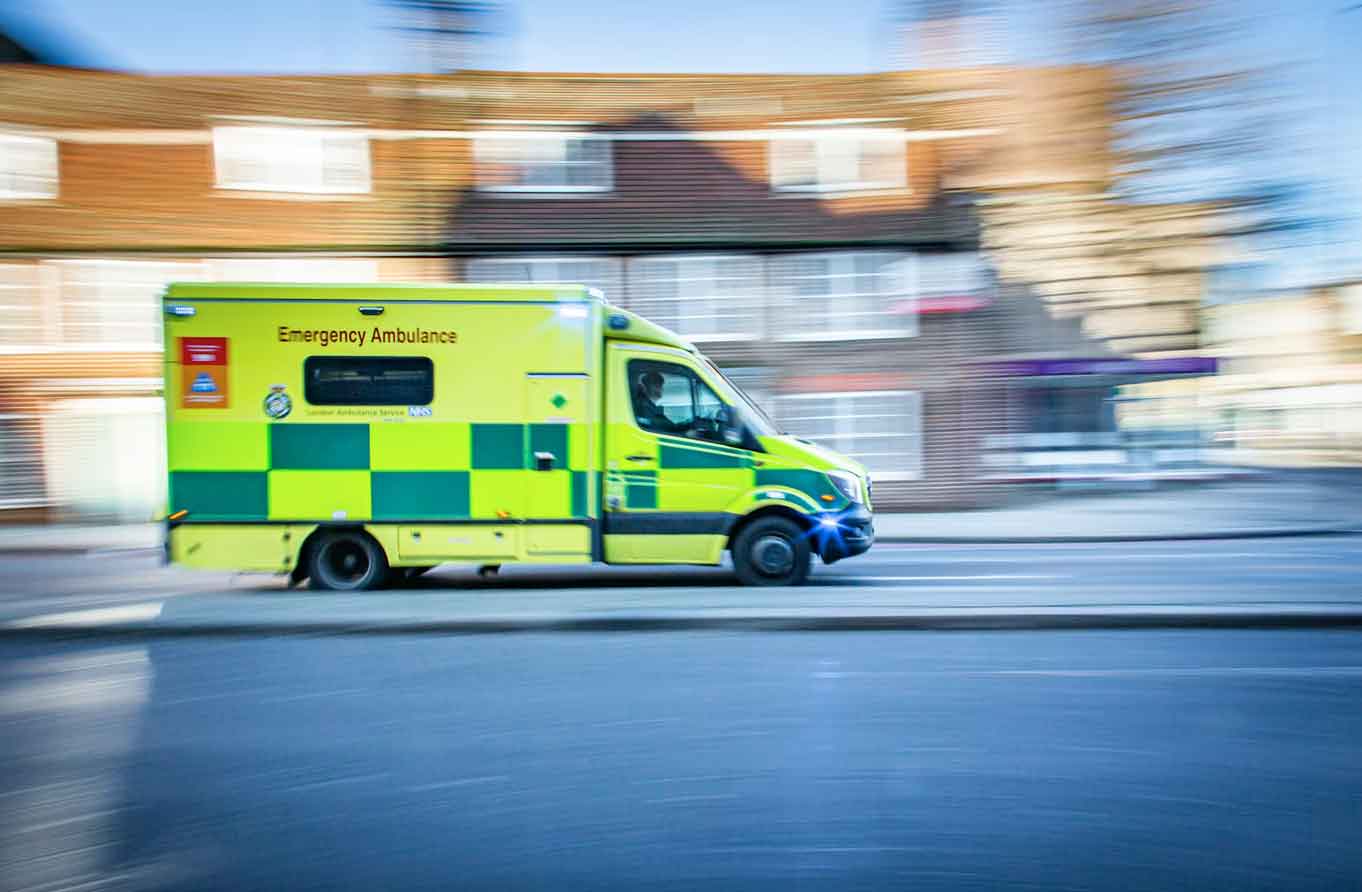
Emergency service access is an understandable concern but is important not to overstate it. Ambulance and fire appliance suspension systems are designed to traverse properly specified speed humps with only minimal delay, typically in the region of 1-2 seconds per feature. For a typical emergency response across 10-15 humps, this equates to 15-30 seconds total delay. Research by the Fire Brigades Union found no evidence that well-designed traffic calming increased fire deaths or serious injuries. In fact, the casualty reduction from lower ambient speeds typically results in an overall time saving for emergency services, as the reduced number of serious collisions requiring response more than outweighs the additional time added by the humps.
As speed humps, there are design options that further mitigate emergency service concerns. Speed tables and speed cushions have longer profiles that allow for faster traversal by emergency vehicles, and cushions can be straddled by wide-axle vehicles. Contemporary design guidance also stipulates that emergency services must be consulted during the scheme development process, to ensure that proposed feature placement and specification accommodates operational requirements.
Noise impacts are a more nuanced issue. Where speed humps have been poorly specified in the past—particularly older, steeper profiles—vehicle suspension impacts and acceleration/deceleration cycles can lead to significant noise. But modern designs with gentler profiles and optimal spacing can actually reduce overall traffic noise compared to uncontrolled 30mph traffic, by eliminating the acceleration phase and associated harsh braking. The important point is to properly specify the design to be 75mm high, with sinusoidal or parabolic profile, constructed from fine-grade asphalt as opposed to coarse material, and spaced at the right intervals to avoid the yo-yo effect.
A number of local authorities have been able to address noise concerns through community engagement and design tweaks. Where residents have raised objections to speed humps on the grounds of noise, presenting acoustic monitoring data demonstrating an overall noise reduction following installation has often been enough to turn detractors into supporters. The key is to convey that, when properly designed, schemes will reduce noise compared to uncontrolled 30mph traffic flows, even when accounting for the features themselves.
Objections around proportionality—whether physical intervention is warranted for a relatively modest speed reduction—are perhaps the most difficult to counter. But, with reference to casualty data, the clear safety benefits even for modest speed reductions answer this question. For a 10mph difference in approach speed, we’re looking at half the risk of a fatality if a pedestrian is hit. Economically, the argument is also compelling: society pays out around £2 million for each serious casualty in terms of medical care, lost productivity and human suffering. The investment in a comprehensive speed hump scheme costing £200,000-300,000 can be offset by preventing just one of these life-changing injuries.
Selecting the Right Traffic Calming Products: Finding Balance
Whilst raised tables have many applications, one theme that has developed in recent years is a return to cobblestone or sett-paved streets as a traffic calming product.
Although cobblestones were a feature of most British roads prior to the 20th century, the search for increased comfort and lower noise levels during the 20th century led to their extensive removal. There are some key differences between the traditional cobblestones and those being specified and supplied today.
In particular, rather than loose, irregular field stones, many modern cobbled solutions make use of precisely-manufactured concrete or granite setts, cut to a specified dimension and laid to close tolerances. When designed well, this results in a surface that still provides adequate texture and vibration to reduce speed, without the noise and discomfort associated with historic cobblestones.
Cobbled surfaces also have aesthetic benefits, creating a visual character that is attractive in conservation areas and within historic town centres and village cores. Used in the right places, cobbled streets can signal to drivers that they have entered a pedestrian-priority area. This leads to community acceptance; residents may be less supportive of rubber or asphalt speed humps but often see cobbled surfaces as an improvement.
Maintenance considerations can also make a cobbled surface preferable in areas where there are frequent utility works. If setts need to be lifted for access, this can be achieved with no long-term scarring of the road surface, unlike asphalt which ends up with significant rutting after numerous excavations. This is particularly useful in historic areas with many Victorian or earlier underground services.
The key is not to over-specify. Traditional cobblestones can be a trip hazard for cyclists and cause difficulty for mobility-impaired pedestrians. Contemporary design guidance therefore recommends smooth strips or channels to facilitate cycle access, as well as careful specification of sett size and laying patterns to avoid wheelchair or walking frame wheels getting trapped. When these precautions are taken, cobbled treatments can provide an elegant solution that respects heritage and achieves traffic management objectives.
Design Excellence: Making Physical Calming Acceptable
All local authorities will experience this spectrum of community response to physical calming, and it’s not the principle of physical calming itself that creates this divide, but the standard of design. Good design and installation is the key to making physical calming acceptable and can be considered under several key headings.
Visual integration
Speed humps and speed tables should be clearly visible through colour contrast or road markings, but they do not have to be eyesores. Best practice now involves the use of block paving or coloured asphalt for table surfaces, allowing the creation of high quality streetscape features that can be real street assets. In conservation areas, natural stone or high-quality concrete products can provide a sympathetic colour palette to complement the historic built environment.
Drainage consideration
Badly-designed or built tables can cause ponding and drainage issues, leading to very legitimate complaints. Design should retain carriageway crossfall or allow for drainage channels across the feature, so speed humps do not turn into speed humps with a pond either side after a heavy downpour.
Maintenance planning
Features built from quality materials, with a good underlying foundation, will be in place for decades with little or no maintenance. Cheap installations with no sub-base or shoddy quality asphalt will rapidly break up, not just creating a maintenance liability but local community outrage at the wasted resources. The upfront costs of high quality construction have long term benefits throughout the lifetime of the asset.
Cyclist accommodation
Speed cushions or tables with cycle-friendly profiles should always be used where there is significant cycle movement along the road. Alternatively smooth channels alongside speed humps will allow cyclists to maintain momentum, whilst the raised feature will have an impact on motor vehicle speeds. This detail is important to ensure the scheme is seen to support active travel as well as restricting motor vehicles.
The Path Forward: Embedding Physical Calming in 20mph Policy
As we see more and more areas moving to 20mph limits the evidence is building up to suggest that a clear and consistent policy position is required. Physical calming measures should be the default approach, with sign-only implementation used only in exceptional circumstances where traffic volumes are very light or physical constraints on the road prevent installation.
This is a big change in the approach to resource allocation and requires councils to plan for higher capital spends than have historically been the case. Physical calming across an average sized residential area can be in the order of £300,000-500,000, versus £20,000-30,000 for signs only. However, this investment will result in actual speed reduction, proven casualty prevention and community confidence, which signs simply cannot provide. We can also see from the example of Wales that sign-only implementation can result in significant damage to public confidence in 20mph policy, as residents see flagrant non-compliance from the majority of drivers.
Central government guidance needs to be strengthened and clarified to make it clear that speed humps, speed tables, and other traffic calming products are not an optional extra or a nice to have, but a fundamental part of 20mph zones that work. This guidance needs to be backed up by a clear expectation around funding and spending in new guidance, with ring-fenced capital available in the region of £300,000-500,000 to support properly engineered schemes. This will have the effect of removing the encouragement many authorities have previously had to go for the cheaper sign-only implementation and seek to make a virtue of the fact their 20mph rollout is ahead of their neighbours.
Local authorities also need to resist the temptation to push out 20mph limits across their areas with no physical supporting infrastructure to demonstrate progress or meet political deadlines. It is not just central government guidance that needs to change, but also the approach of individual local authorities. A more measured approach, prioritising areas with highest pedestrian activity and highest risk of casualty, backed up by comprehensive physical measures will bring about a 20mph environment that is truly safe for all users. This will bring better long-term outcomes than a blanket approach of rolling out 20mph signs with no physical infrastructure.
Conclusion: Engineering Reality, Not Just Aspiration
The 20mph revolution presents a once in a generation opportunity to make our roads genuinely safer and improve the quality of life in communities across the UK. The case for lower speed limits in residential areas is overwhelming and we have not seen the opposition we might have expected, thanks to the unanswerable public health argument. However, we have not got to this point without a healthy dose of reality.
Speed humps and bumps, speed tables, bump strips and other traffic calming products are not an optional extra at the end of the process. They are not a necessary evil to ensure that 20mph will work. They are the single most important factor in changing behaviour, which is required if we are to meet the aspirational targets of 20mph. If we go back to the evidence supporting 20mph, it is clear from all of the international experience that lower speeds can and will be delivered if appropriate measures are used.
Speed humps and associated traffic calming products are the enforcement mechanism that makes 20mph policy work. They are not a way of slowing the majority of traffic to the limit if the voluntary measures of signage, key signing and communications are followed. Authorities that are serious about 20mph and who invest in quality, appropriate design and installation, and in the process engage with their communities, will see schemes that not only reduce speeds, but have the benefit of saving lives, preventing injuries, and creating better places for everyone. Those authorities who choose the low cost option of sign only implementation, are far more likely to end up with disillusioned communities, higher casualty rates and the knowledge that their implementation will not have delivered any of the promised benefits.
Do we really want 20mph zones that are signposts to the real world?
Or do we want to make the physical changes that make 20mph the reality that all of us are now calling for?
The answer should be clear and the engineering tools to make it happen are already at our disposal. It’s time to embrace speed humps and related products, not as a necessary evil, but as the essential building blocks of genuinely safer streets.